UK Fraud Strategy: Public-private data sharing paves the way for real-time threat disruption
UK Fraud Strategy: real-time data sharing across sectors and borders powers the Global Signal Exchange to disrupt online fraud at scale—learn how it works.
Emily Taylor is the CEO of Oxford Information Labs and a co-founder of the Global Signal Exchange, a platform focused on global data-sharing to combat cyber threats.
With over two decades of experience in internet policy, Emily is an Associate Fellow at Chatham House and is the former Editor of the Journal of Cyber Policy. A qualified lawyer, she began her career in the internet sector in 1999 and has held several notable positions:
Emily's research focuses on geopolitics, technical standards, and emerging technologies. She has held academic roles as a Research Associate at the Oxford Internet Institute and an Affiliate Professor at the Dirpolis Institute, Sant'Anna School of Advanced Studies in Pisa.
Emily is a graduate of Cambridge University and holds an MBA from the Open University. She is a recognized commentator on cybersecurity issues and frequently contributes to news and media outlets.
UK Fraud Strategy: real-time data sharing across sectors and borders powers the Global Signal Exchange to disrupt online fraud at scale—learn how it works.
Data Sharing & the GSE lead key fraud discussions at the UNODC Vienna summit, highlighting cross-border insights and victim-focused strategies—learn more now.
Founded by OXIL, Google, and GASA, the Global Signal Exchange (GSE) transforms fraud prevention through collective defense. Powered by AI, GSE bridges tech, finance, and law enforcement with real-time alerts to disrupt the $1 trillion global scam economy. Read more about its impact.
GSE CTO Lucien Taylor announces the expansion of the Malvertising Pilot following a successful signal exchange between Google and Amazon. Phase 2 is now open to organizations with malvertising threat intelligence.
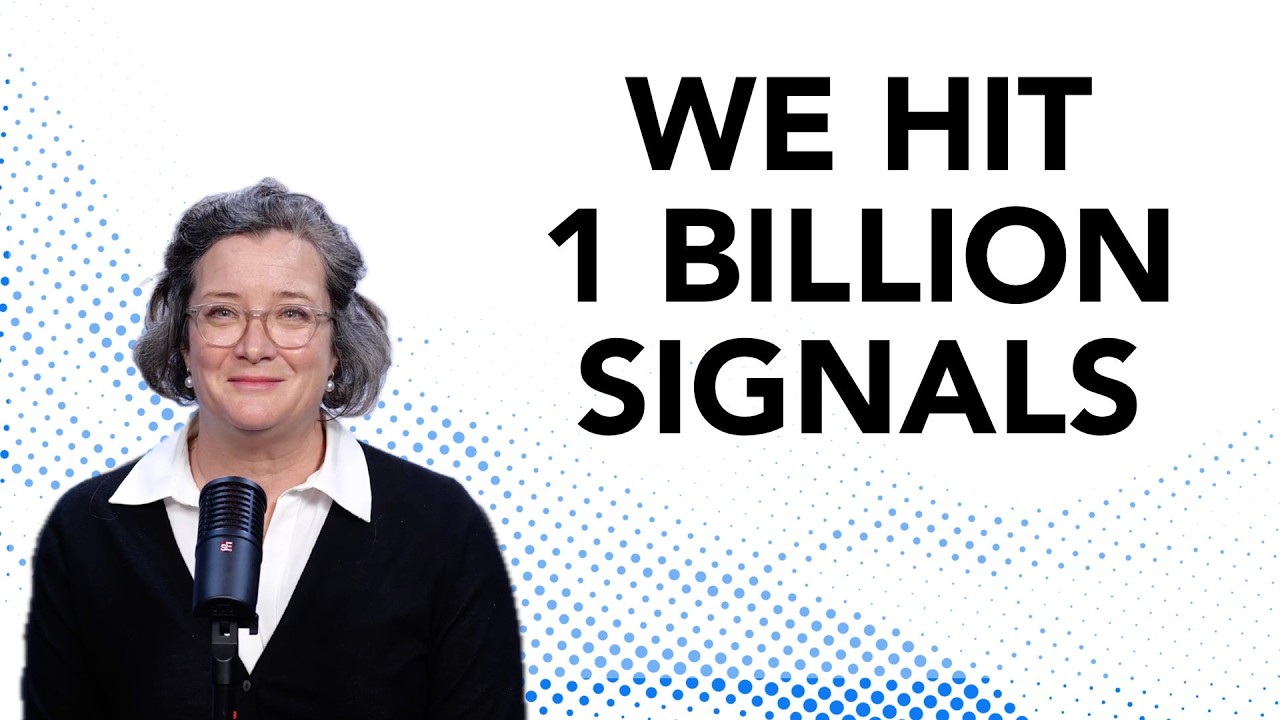
The global fight against online scams has entered a new phase, driven by collaboration at a scale and speed not previously achieved. As at January 2026, the Global Signal Exchange is tracking one billion threat signals - a seismic rise on 40 million signals when the GSE launched in January 2025. CEO Emily Taylor commented: “The extraordinary growth in signals over just one year is a testament to the GSE partners’ commitment to combatting the global scourge of scams and fraud.”
The Global Signal Exchange (GSE), today welcomes support from Craig Newmark, founder of craigslist and a leading digital-safety philanthropist, to accelerate the GSE’s work to help organisations tackle online scams, fraud and abuse with unprecedented pace, software capabilities and scale.
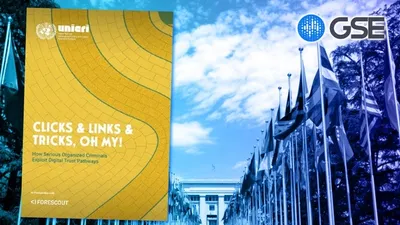
A new UNICRI study, "Clicks & Links & Tricks, Oh My! How Serious Organised Criminals Exploit Digital Trust Pathways," highlights the exploitation of URLs and domain names for criminal purposes. This research, which incorporates insights from organisations like GSE, was successfully launched at the Global Cybersecurity Forum in Riyadh. It explores emerging threats like Blockchain Domains and the challenges in mitigating cybercrime, emphasising the need for collaborative solutions like the Global Signal Exchange.
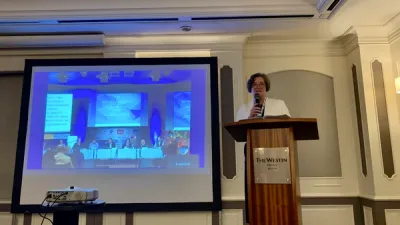
Cross border data sharing is legally complex. Emily Taylor's keynote speech at the International Data Law Forum in Berlin, 2025, provides a background on the legal issues, draws parallels with the airline industry and safeguarding in health and social care, and points to signs of hope through voluntary, industry-led initiatives, such as the Global Signal Exchange.
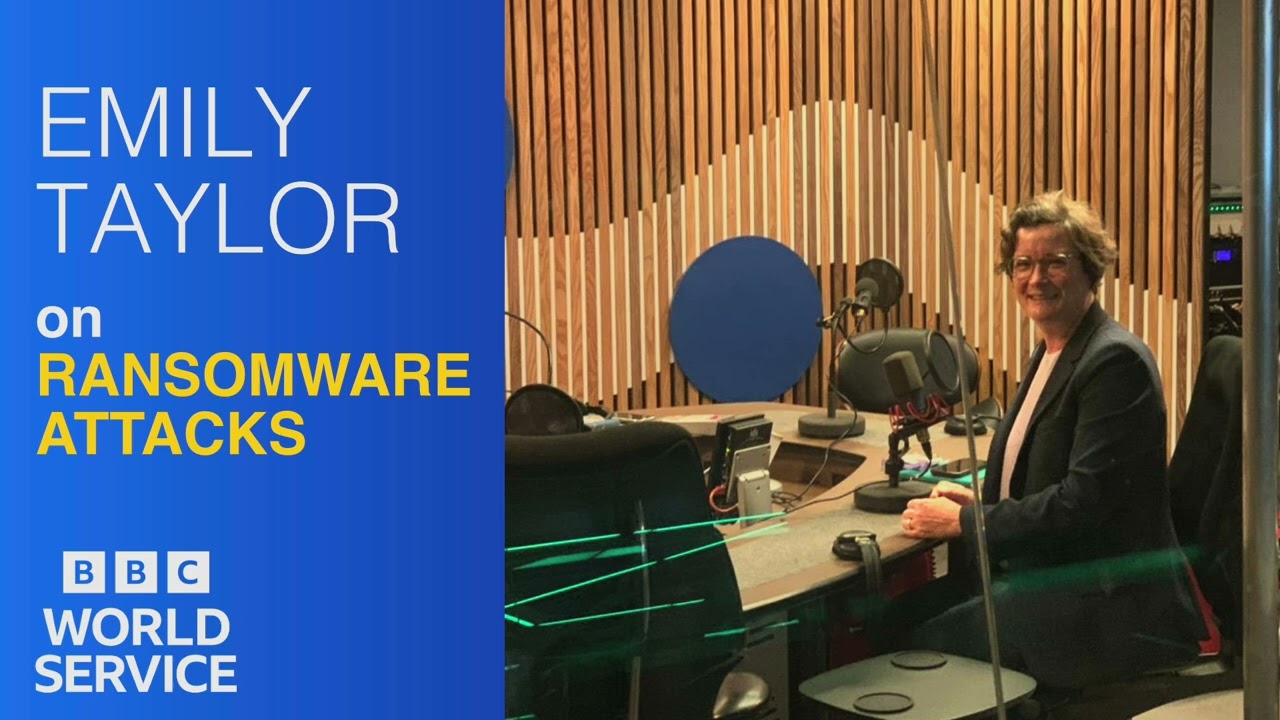
In this segment, Emily Taylor, CEO of Oxford Information Labs and co-founder of the Global Signal Exchange, provides a clear and insightful explanation of how ransomware attacks work. Learn what happens when a company falls victim, from being locked out of their systems and the scrambling of crucial data to the demand for ransom.
Emily Taylor, CEO of Oxford Information Labs and editor of the Journal of Cyber Policy, introduces her groundbreaking initiative, the Global Signal Exchange (GSE)